Cortex — Designing a highly customizable Digital Asset Management System
The who, what, when, where, why, and how
WHO
The Digital Asset Management (DAM) platform, Cortex, is designed to manage digital assets such as images, videos, and files of any type. It is like an enhanced version of Google Drive or Box and can handle the needs of large and complex companies.
WHAT
Cortex is a suite of tools that work together seamlessly. It functions as a DAM, Customer Relationship Management (CRM), Content Management System (CMS), licensing and invoicing system, and workflow system, among other things. In short, it is a highly sophisticated integrated system.
When I joined the team as the UX lead, Asset Management looked like this:
Cortex’s Asset Management in the early 2000s
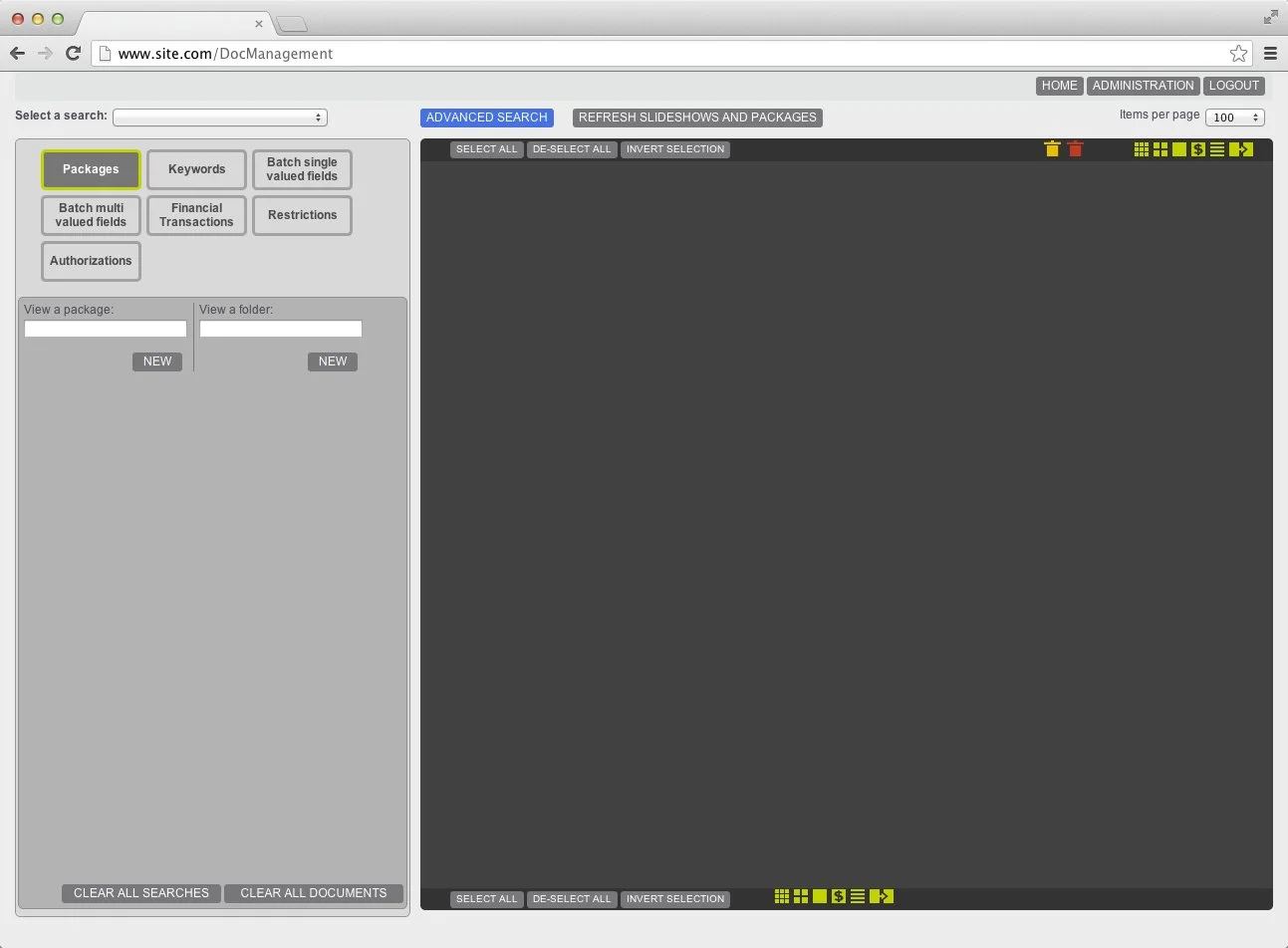
It now looks like this (for WWF as it can be highly customized):
Cortex’s Asset Management in 2019
This is not just a rebranding; the associated functionality makes the tool highly flexible and customizable.
I was grappling with a challenging question: how can I create a tool that our users can customize, yet I cannot be certain of its final appearance?
The solution involves a highly adaptable UX and Design System that operates on building blocks, similar to a set of "Lego" blocks.
WHEN
I was the first US employee of Orange Logic hired in 2012 as the Lead Designer and promoted in 2015 as a Partner.
Additionally, while at Art + Commerce from 2004 to 2012, I was a customer of Cortex as I selected it as our backend system to manage the image archive.
WHERE
My Design leadership impacted the entire Cortex suite of products.
WHY
The prior Asset Management system was created by engineers who did a commendable job. However, its potential for growth was limited. I viewed this project as more than a redesign; it was crucial for the design structure to have the ability to expand beyond what was currently known. My goal was to establish a design and user experience system that would empower engineering teams to initiate projects without waiting for designs, as there was a repeatable foundation.
HOW
One challenge we faced at Orange Logic was designing a product that could be highly customized, making it difficult to predict its final appearance.
We approached product design not as architecture but as an organic system.
Our philosophy was rooted in the principles found in nature, from atoms to organs to entire ecosystems. By breaking down the product into simple, repeatable parts and following straightforward rules for combining them, we could create a cohesive whole that could be morphed to fit each individual customer's needs.
Below are two images of the same screen in Cortex. However, they have been customized by individual customers using a powerful drag-and-drop CMS to meet their specific requirements, resulting in a significant difference in appearance.