Optimizing the B2B experiences with the confidence of evidence-based design.
—
Uber
Optimizing the B2B experiences with the confidence of evidence-based design.
—
Uber
Uber's digital marketing team had a clear mandate: onboard more drivers while reducing the cost of acquiring each one. No drivers, no rides. No rides, no business. The metric was simple: total drivers onboarded divided by total marketing spend. My job was to improve that ratio through UX.
Over several months, my team ran 39 A/B experiments on the driver onboarding flow. We were methodical, patient, and evidence-driven. Most experiments moved the needle. One of them didn't, and that's where the real story starts.
Uber — Finding the bug that changed everything.
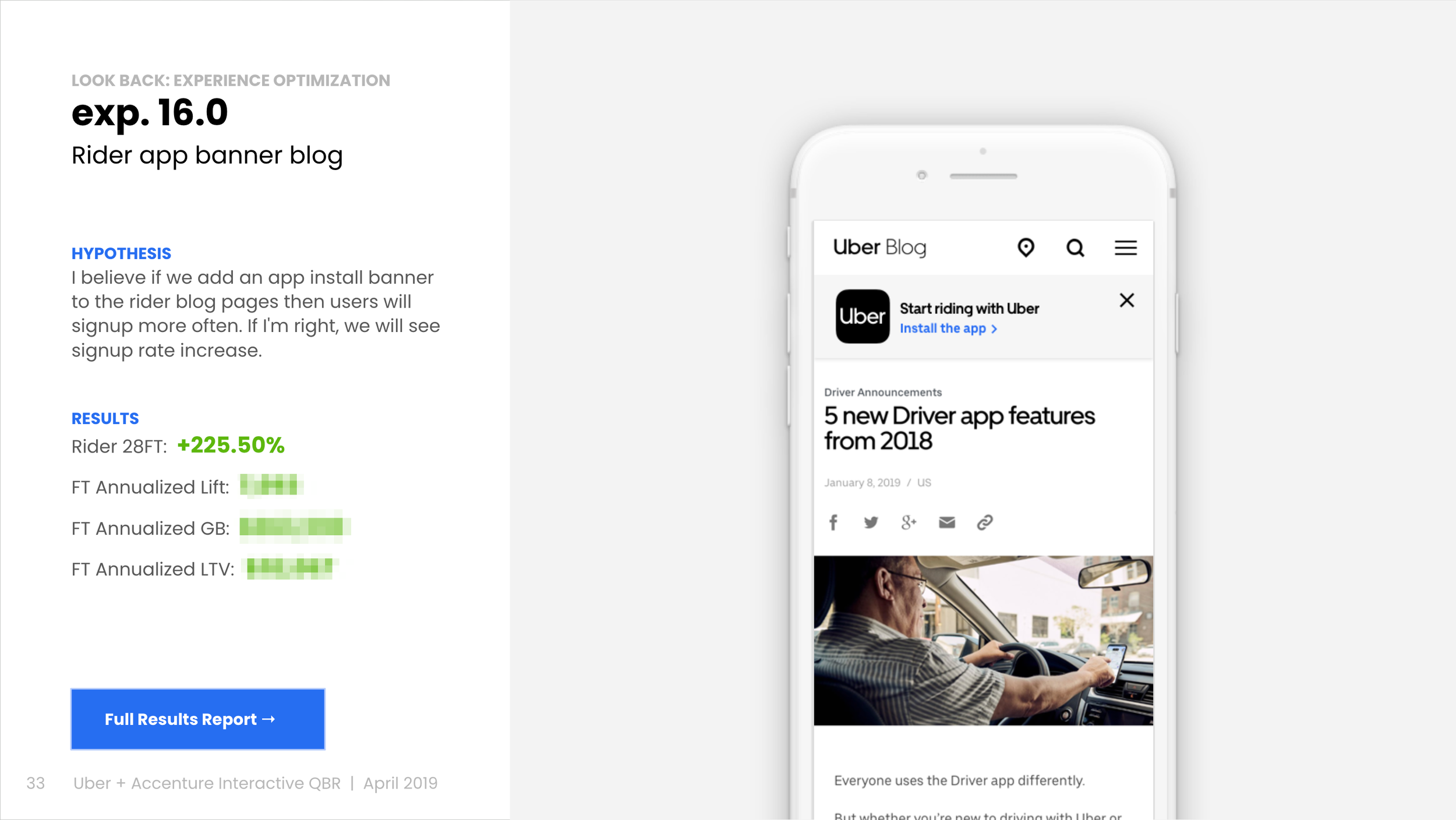
We tested a hypothesis that many potential drivers were already Uber riders. If true, we could skip large parts of the onboarding flow for that segment, dramatically reducing friction and accelerating sign-ups. The data came back and told a discouraging story: 30% of users downloaded the app, but only 2% completed onboarding. By any measure, the experiment had failed.
Except something didn't add up.
I couldn't accept that 98% of people who downloaded the app would simply abandon it. I consulted with my analyst and account manager. We suspected existing riders who became drivers weren't being counted correctly, which would mean the entire measurement program was built on flawed data. Uber's measurement team assured us that wasn't the case and denied our request to run a follow-up experiment.
So I ran my own.
Since I already had an Uber account, I went through the driver onboarding process myself and asked Uber's digital marketing team to track my specific account through the flow. What we found confirmed everything we suspected: existing riders converting to drivers were not being tracked due to a bug.
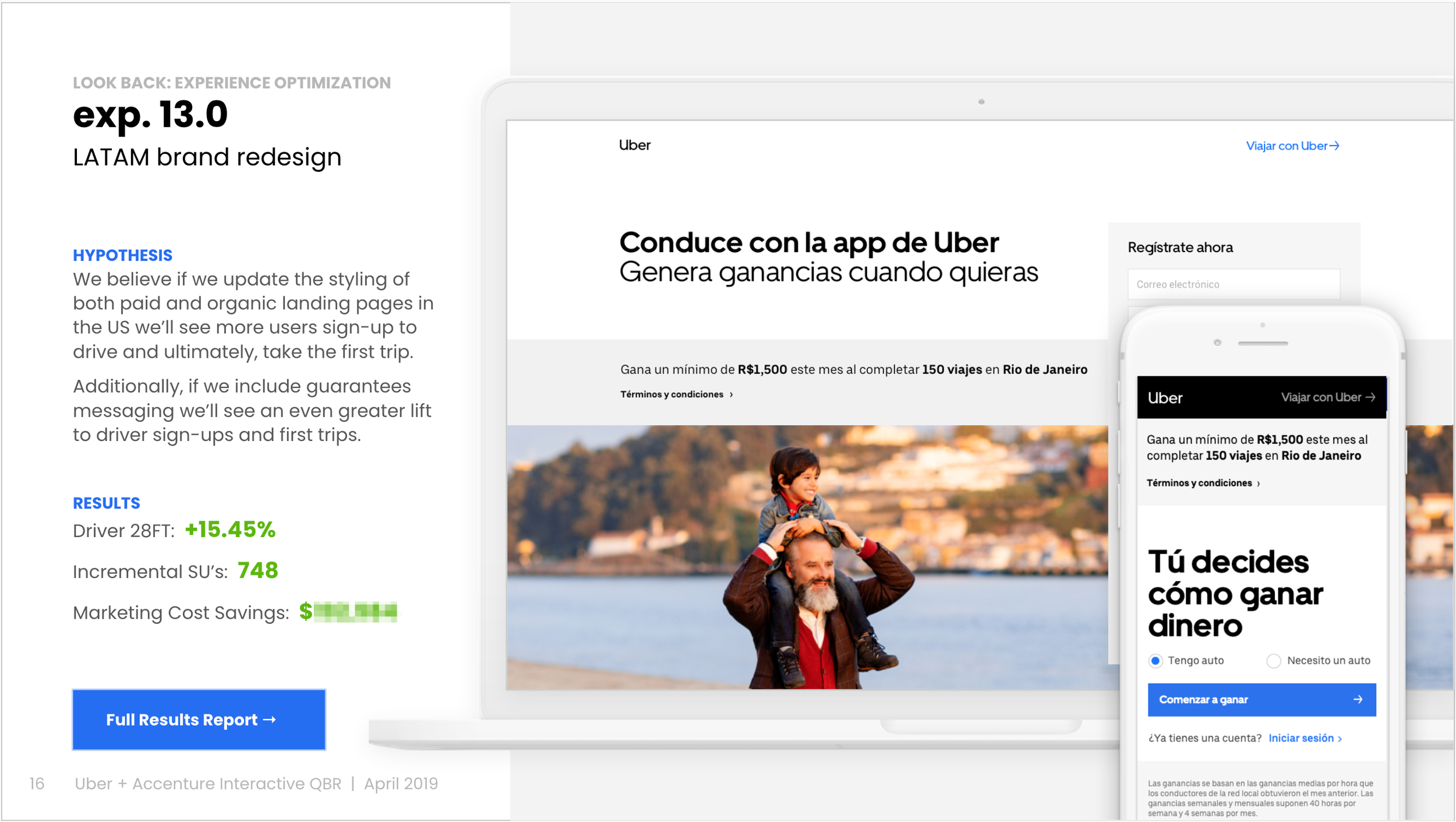
That discovery changed the entire story of the optimization program that year. The digital marketing lead was promoted to oversee Uber's entire digital marketing program on the strength of what we uncovered.
The numbers: 35,000 organic driver sign-ups and $1.9M in reduced marketing spend in a single quarter.
But the bigger lesson was this: the most valuable thing a UX team can do isn't always design. Sometimes it's refusing to accept a number that doesn't make sense.